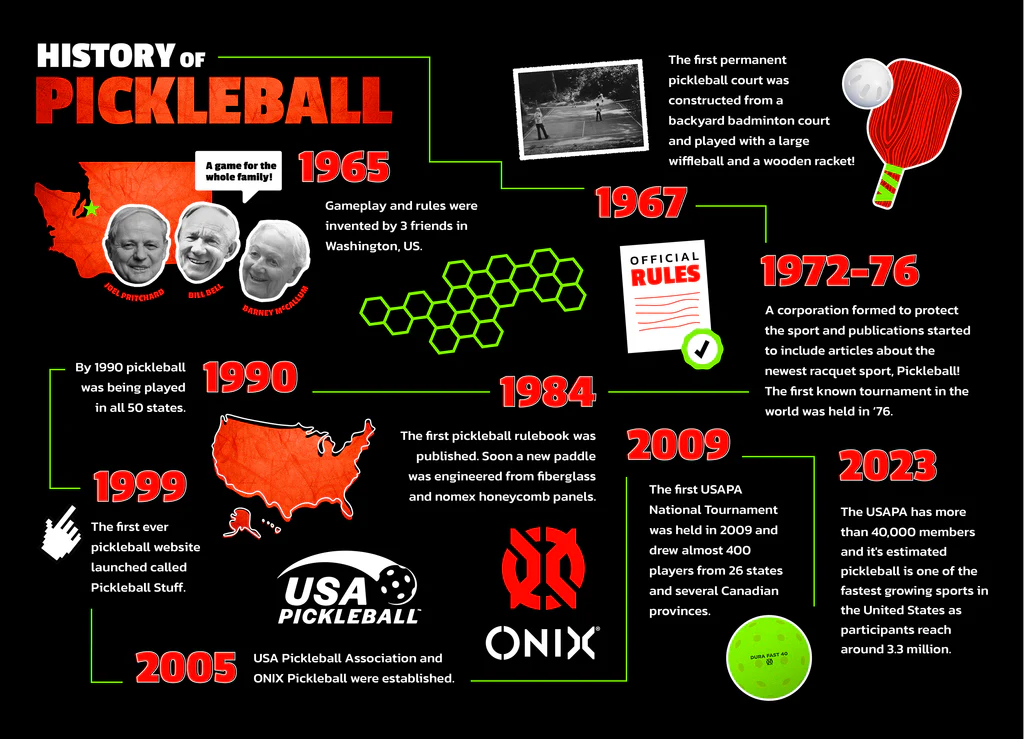
Pickleball was invented in 1965 as a summer pastime in Washington state. Today, it’s one of the fastest-growing sports in the world, with pro tours, community leagues, and — now — the Blue Sky City Open bringing it to new heights in Calgary.
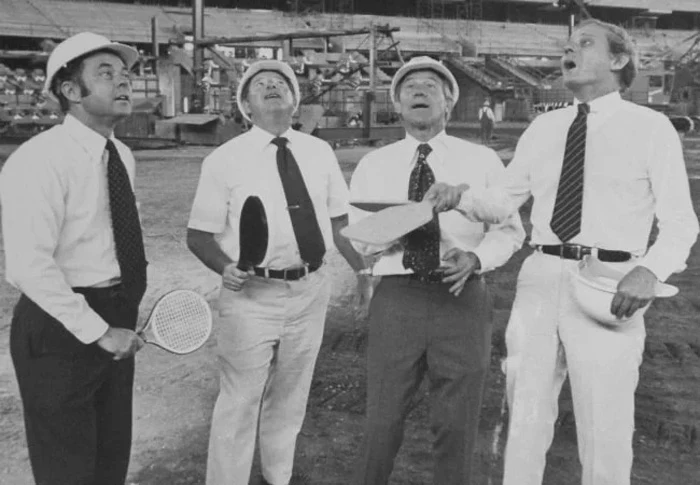
Origins (1965–1970s) Pickleball began in the summer of 1965 on Bainbridge Island, Washington, when U.S. Congressman Joel Pritchard and his friend Bill Bell improvised a game to entertain their families. Lacking a shuttlecock for badminton, they borrowed ping-pong paddles and a Wiffle ball, lowered the net, and gradually refined the rules with the help of Barney McCallum. The name “pickleball” has two main origin stories: one, as related by Joan Pritchard, likened the mashup of sports to a “pickle boat” in crew racing; another credits the Pritchards’ dog Pickles, who chased stray balls.
By 1967, the first permanent pickleball court had been built, and by 1968, Pickle Ball, Inc. was formed to produce paddles and kits. The first known tournament took place in 1976 in Tukwila, Washington, and by 1984, the United States Amateur Pickleball Association (now USA Pickleball) published the first official rulebook and held its first national championships.
Growth and Institutionalization (1980s–2000s) Pickleball spread beyond the Pacific Northwest as retirees and “snowbirds” moved to warm climates like Arizona, California, and Florida. In 2017, the Pickleball Hall of Fame was established, later unified with USA Pickleball’s Hall of Fame in 2023. In 2022, it achieved formal recognition when Washington designated it the state’s official sport.
Booming Popularity (2010s–2020s) Pickleball has become America’s fastest‑growing sport—from 2021 through 2024 it held that title, with participation reaching nearly 20 million by 2024—a staggering 311% increase since 2021. Growth spurred investment in infrastructure: more than 3,000 dedicated courts were built in major U.S. cities over seven years, and the Sports & Fitness Industry Association reported a 223.5% three-year growth in players by early 2024.
The sport’s accessibility—easy to learn, low physical stress, minimal equipment, social by nature—explains its surge, particularly during the COVID‑19 era when outdoor, distanced activity became precious. Its inclusive nature has even drawn celebrities—from DiCaprio to Kardashians—and less physically able players, bridging generations and social backgrounds.
Professionalization & Global Expansion
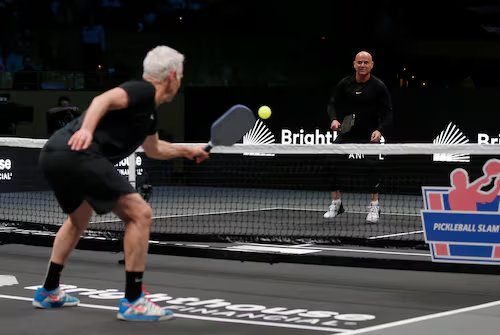
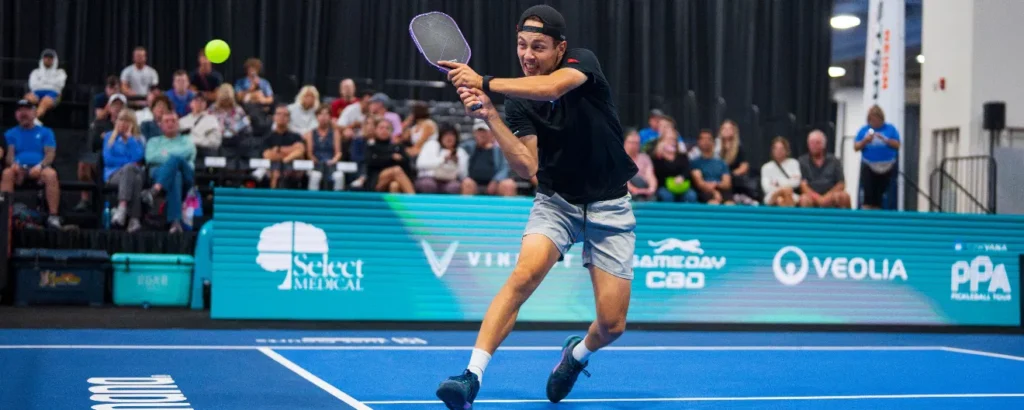
Professional pickleball took off with the founding of tours and leagues in 2019, including the Association of Pickleball Players (APP) and the Professional Pickleball Association (PPA). Major League Pickleball (MLP) launched in 2021, backed by figures like LeBron James and Drew Brees. In 2023 the PPA and MLP merged, forming the United Pickleball Association (UPA), which is expanding internationally—with professional tours launching or planned in Australia, India, Asia, and beyond. A global rankings system, Pickleball World Rankings (PWR), was established in mid‑2024 to support an international competitive circuit.
Pickleball is featured as a demonstration sport in international events like the 2022 Maccabiah Games and the 2023 African Games. Meanwhile, international governing bodies are consolidating. The International Pickleball Federation (IPF) and World Pickleball Federation (WPF) merged in 2025 to form the new global governing body, with its base envisioned in Lausanne, Switzerland.
Today’s Popularity (2025) By 2024, pickleball had reached approximately 50 million players in the U.S. with annual growth rates exceeding 50%—threatening to surpass basketball in sheer number of participants; in Spain, there are already 20,000 players and a central hub in Madrid with 300+ active participants. In Huntsville, Alabama, the sport has become a key recreational and social driver, prompting cities to invest in dedicated facilities and clubs—such as the upcoming 40,000 sq ft Picklr indoor venue with 11 courts and structured training programs. Likewise, in Midland, Michigan, participation exploded from around 20 players in 2017 to over 1,500 app users and a full-fledged regional tournament event